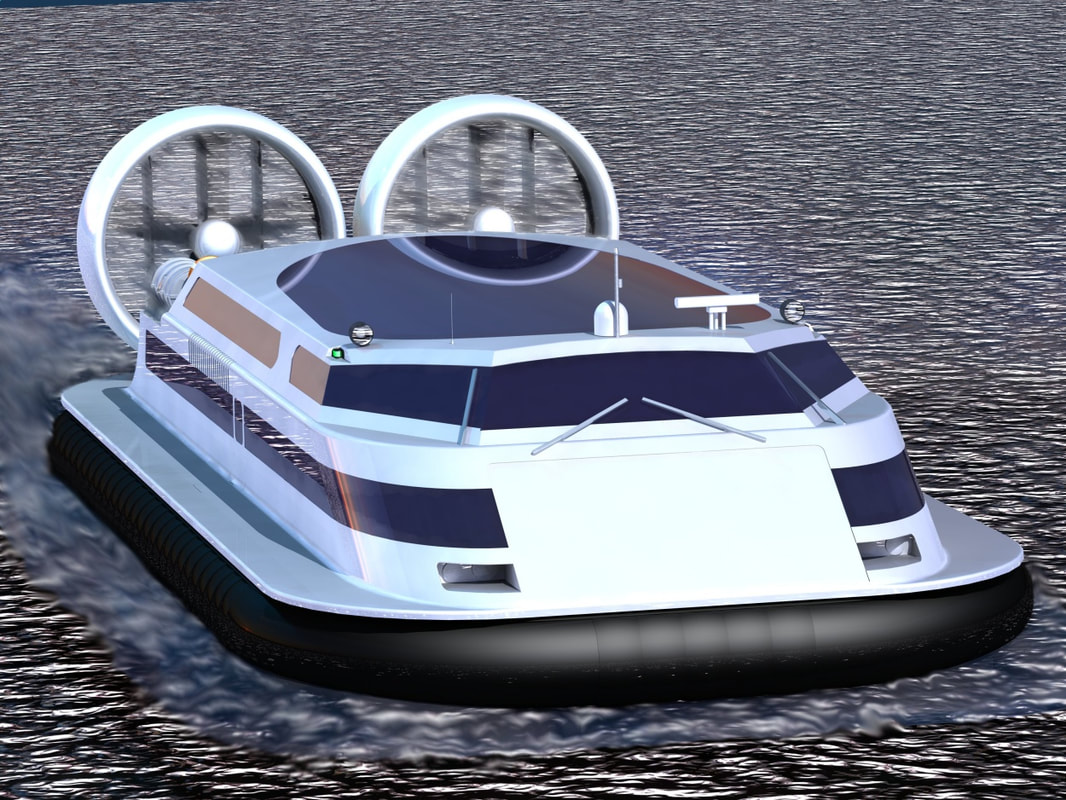

"Cheap Thrills" Mariah Hovercraft Blog #001
What does hovercrafting mean to me?
It means complete and absolute freedom. I can fly over Port Philip Bay (also called Nairm), I can drive up on the beach and straight over the meadow to my heart’s desires (provided the meadow isn’t made up of huge boulders or a thick forest covered in logs). I can explore the shore, I can explore the mudflats and I can even fly over shallow reeds, reefs and quays without so much as disturbing the inhabitants below. I won’t be churning up sand or water with a propellor and I won’t be creating much of a wake which disturbs the banks or the shore. I’ll be using half the fuel that I would need in a traditional boat of the same size and as hybrid electric or certain high tech Australian inventions come into the mainstream, I’ll be doing my part for the environment just going for a cruise.
We are on the cusp of a hovercrafting revolution. As soon as the noise cancelling tech catches up and makes the crafts quiet and peaceful to drivers, passengers and onlookers alike, there will be no stopping this formerly niche experience of freedom.
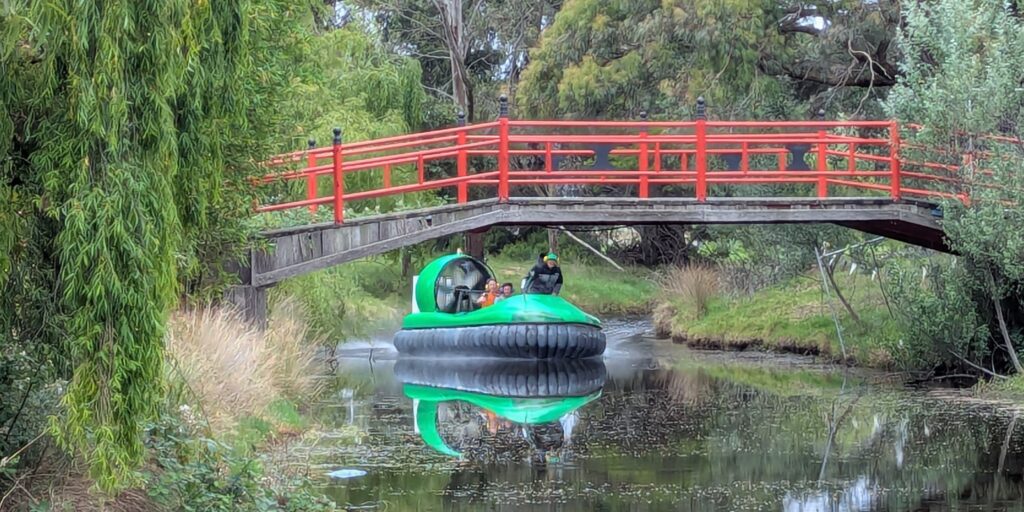
Another brilliant aspect of what taking flight on a hovercraft means to me is the drifting aspect. Not many of us have had the opportunity to drive on a race track and drift in a car (not many of us in Australia, as all folks who live in snow countries know exactly what drifting/sliding on snow or ice feel like). It is quite the feeling. The nose of your vehicle is pointing one way, but you are drifting laterally and hoping your wheels will engage onto the road before you drift off into the bush. This happens on a hovercraft every time you turn! As you engage the steering wheel which turns the rudders, your hovercraft will turn sideways but will continue in the same direction until you rev the throttle to get sufficient thrust to now travel in the direction your nose is pointing. Next turn you get to do it all over again! What a freeing drifting thrill!
Check out our youtube channel funride videos to see the drifts in action at https://www.youtube.com/@mariahhov
"SES SOS" Mariah Hovercraft Blog #002
Where is the hover industry heading in the second quarter of the twenty first century? Globally, it is expanding in the search & rescue, military (shan’t we choose peace over profit) and recreational sectors.
In Australia, we have some kind of mental block about hovercraft for first responders.
I have asked SES, Police Rescue and other emergency responders why their organisations have not invested in hovercraft for search and rescue operations in Australia. I get the exact same answer from everyone as if they have been fed a script and are regurgitating the same answers. 1 – “Hovercrafts cannot be controlled” 2 – “Hovercrafts are useless in high winds” 3 – “Hovercrafts burn too much fuel and are not economical”. All these comments I have been hearing are unequivocally incorrect.
Here is the truth, with which I hope to write a new narrative about hovercrafts in Australia.
Number one. When a hovercraft is well designed and well built with ample power and precision controls, the only variable for whether the craft can be controlled properly or not is the pilot.
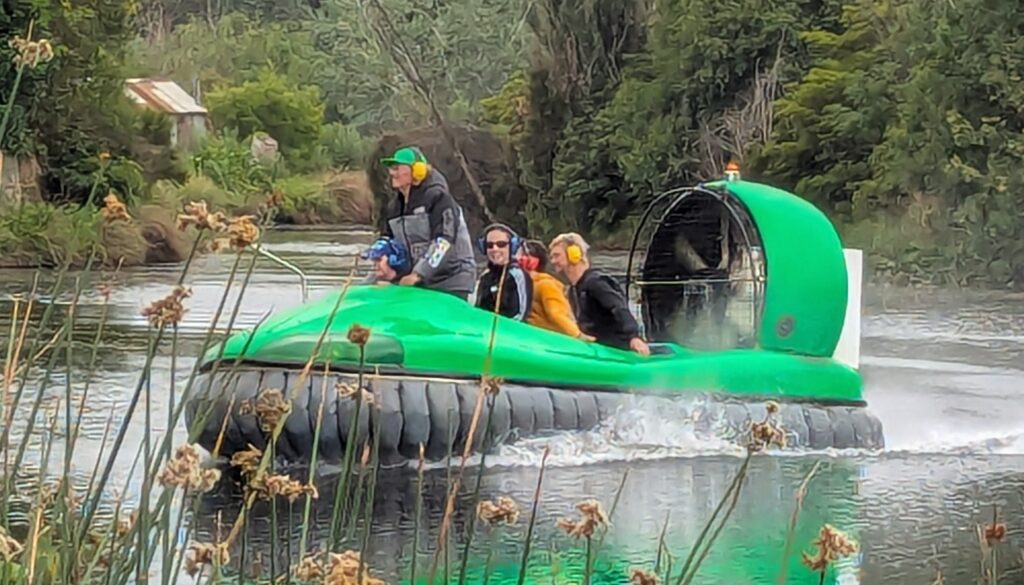
Emergency service first responders, we are here for you and will gladly train you to the point where you feel confident on the water, over the mudflats and in most sea conditions. Of course, if you do not know what you are doing and plough your hovercraft into crashing waves, you will potentially break the blades and return to the previous assumptions you had. If, however, you have some knowledge that all surfers innately have, about timing sets of waves, knowing where the rips and channels are, you will achieve unprecedent response times.
Having a craft with ample power to get you where you need to be is priceless when it comes to saving minutes and saving lives.
Number two. When hovercrafts are designed with high winds in mind, having enough weight in the correct areas of the craft and an engine and fan system with enough thrust to counteract the effects of the wind, small rescue hovercrafts can maneuver comfortably in winds up to 30 knots.
Hovercrafts previously used by SES in Australia maxed out at just over 20,000 litres of air per second of thrust, while the innovated fan technology of the 5 seater Mariah 425 Hovercraft pushes over 40,000 litres through the fan. This is the kind of power first responders need to get to where they need to be fast and counteract the effects of high winds.
Three, after over 30 plus years of building and experimenting with hovercrafts, it is absolutely clear that when comparing the best boat technology (not including electric) with the same size Mariah hovercraft, we go twice as fast for half the amount of fuel. Reach out and we’ll share our excel spread sheet figures with you.
Having hovercrafts in our first responders’ fleets is a no brainer for all parts of Australia and we must replace the former false narratives circulating with truth, training and proven results.
I’ve pitched the case without even mentioning how hovercrafts are the only vehicles that can reach where boats or 4x4s cannot. The Australian public deserves the best and we must move beyond false narratives and give truth a go!
Here we go! Next blog will be about the world’s first emissions free hovercrafts using the Australian invented Thunderstorm Generator…
And I’d like to close with Senior Constable 21959 Alister Greenwood’s words about his experience using a Mariah 425 hovercraft: “I had not used a hovercraft in a search and rescue job before, but this incident proved just how versatile they can prove to be in difficult circumstances.”